

Tanzania, Where the Plains Do Not End
A million animals moving across grass that runs past the horizon, a crater full of wildlife, and an island to finish on.
The Serengeti Is Not a Park. It Is a Region.
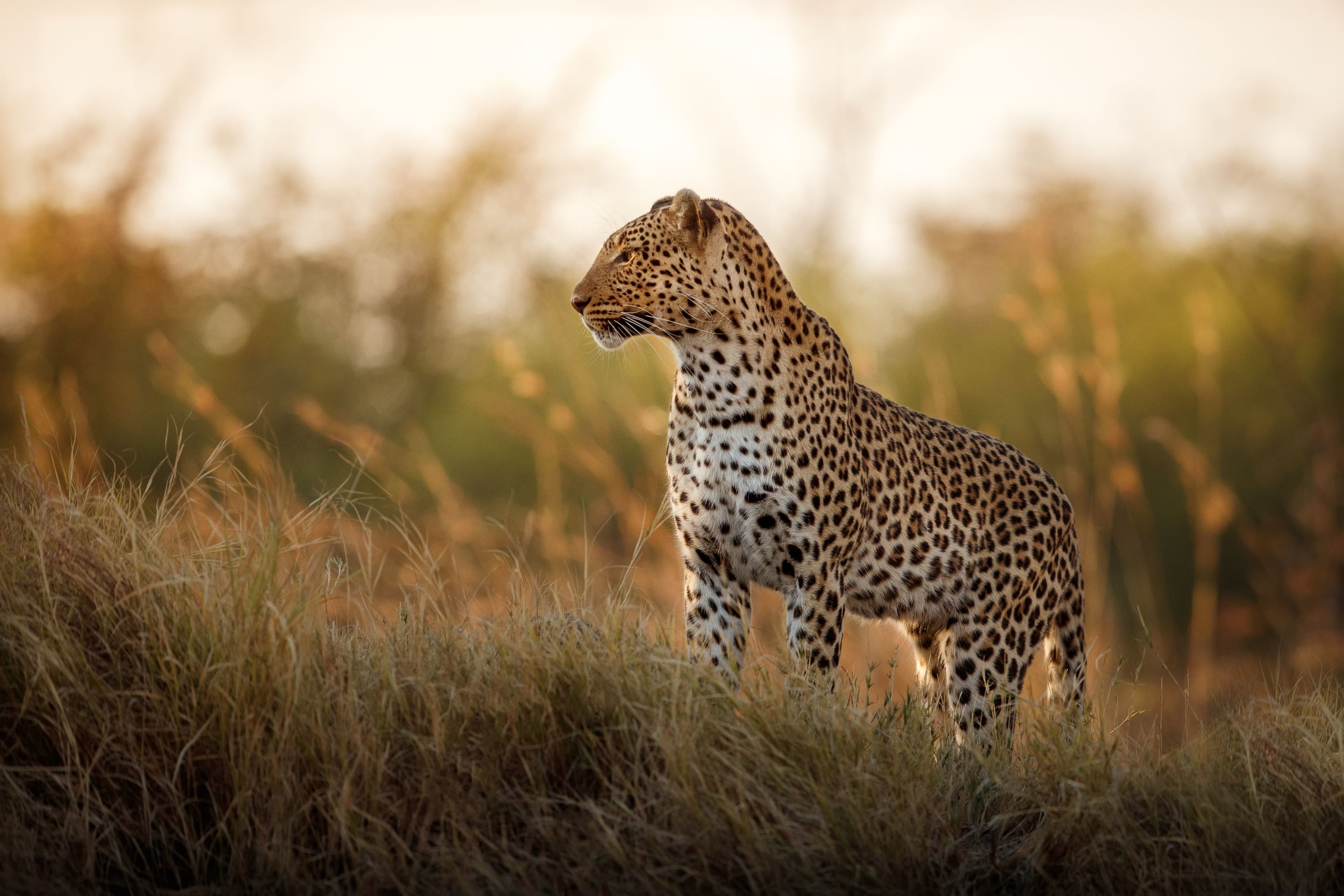
Most people arrive expecting a large reserve. The Serengeti is closer to the size of a small country, and the animals move across it all year rather than staying put. That changes how the trip is planned. There is no single spot marked Serengeti where the wildlife waits. The herds follow the rain in a slow circle, and where you stay in February is not where you stay in August. Book the wrong camp for the wrong month, and you will spend the week driving. Everything else Tanzania offers sits alongside it. The Ngorongoro Crater, an intact caldera with its own resident population. Kilimanjaro, the highest peak in Africa. And Zanzibar, an hour away by air, where the trip stops moving.
Four Places, Four Completely Different Weeks
Two of these make a strong trip. Three is a fortnight, and the version most people wish they had booked.
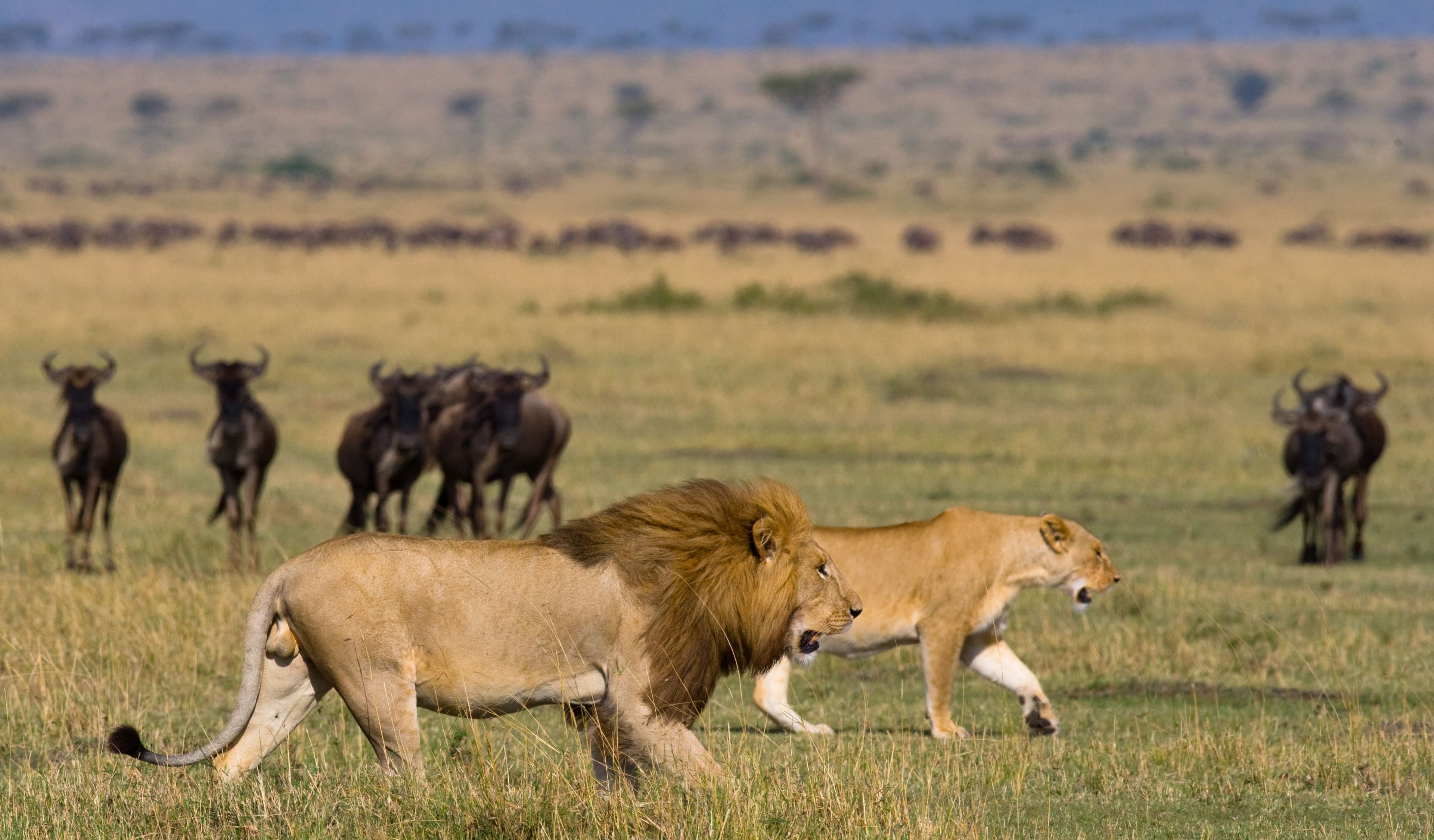
The Serengeti
Grass to the horizon, and the largest land animal migration on earth crossing it
Big cats in numbers, and balloon flights at dawn over the plains.
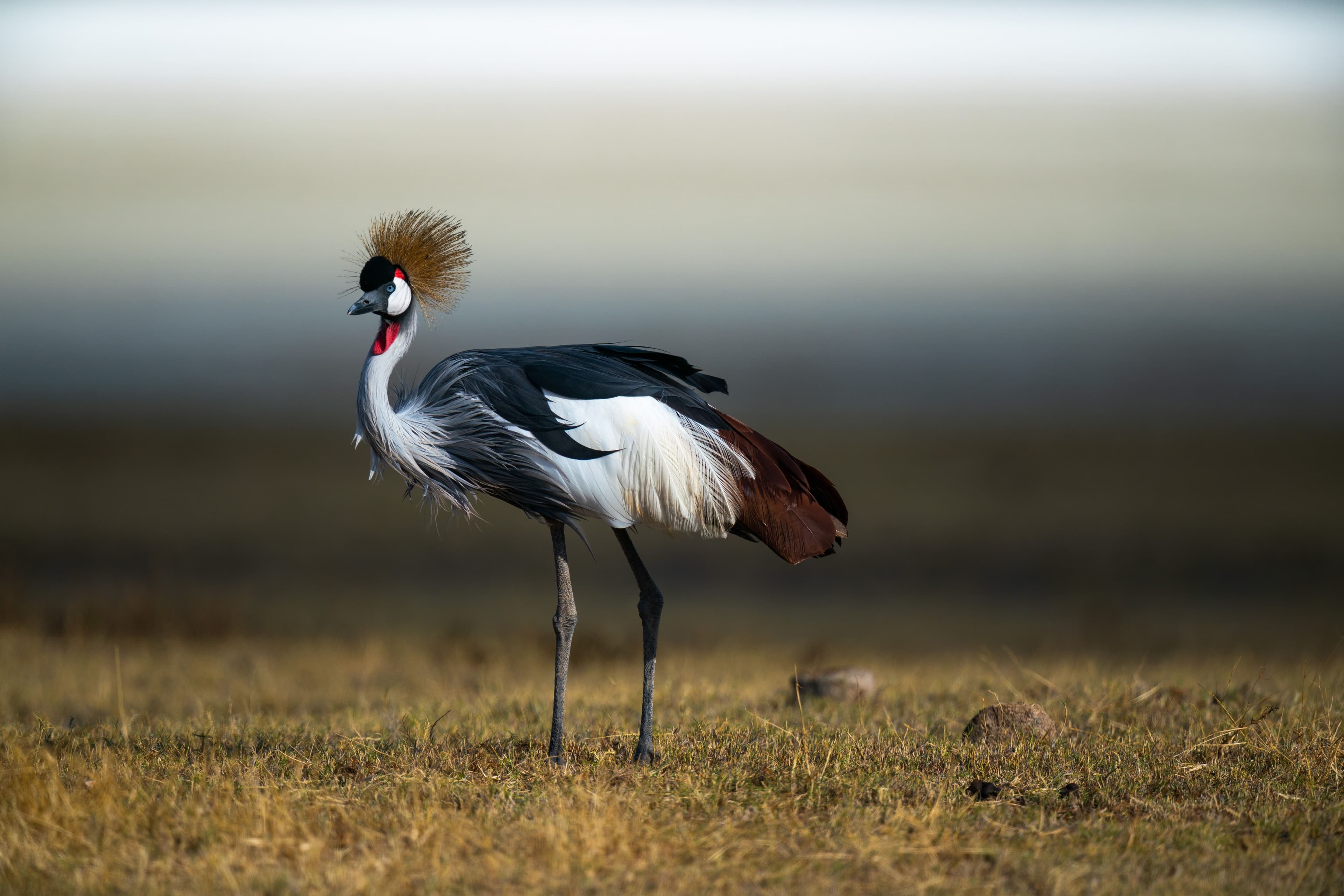
Ngorongoro Crater
A collapsed volcano twenty kilometres across, with steep walls and a floor full of animals that never leave
Lion, elephant, buffalo and some of the last black rhino in the region, all inside one bowl.
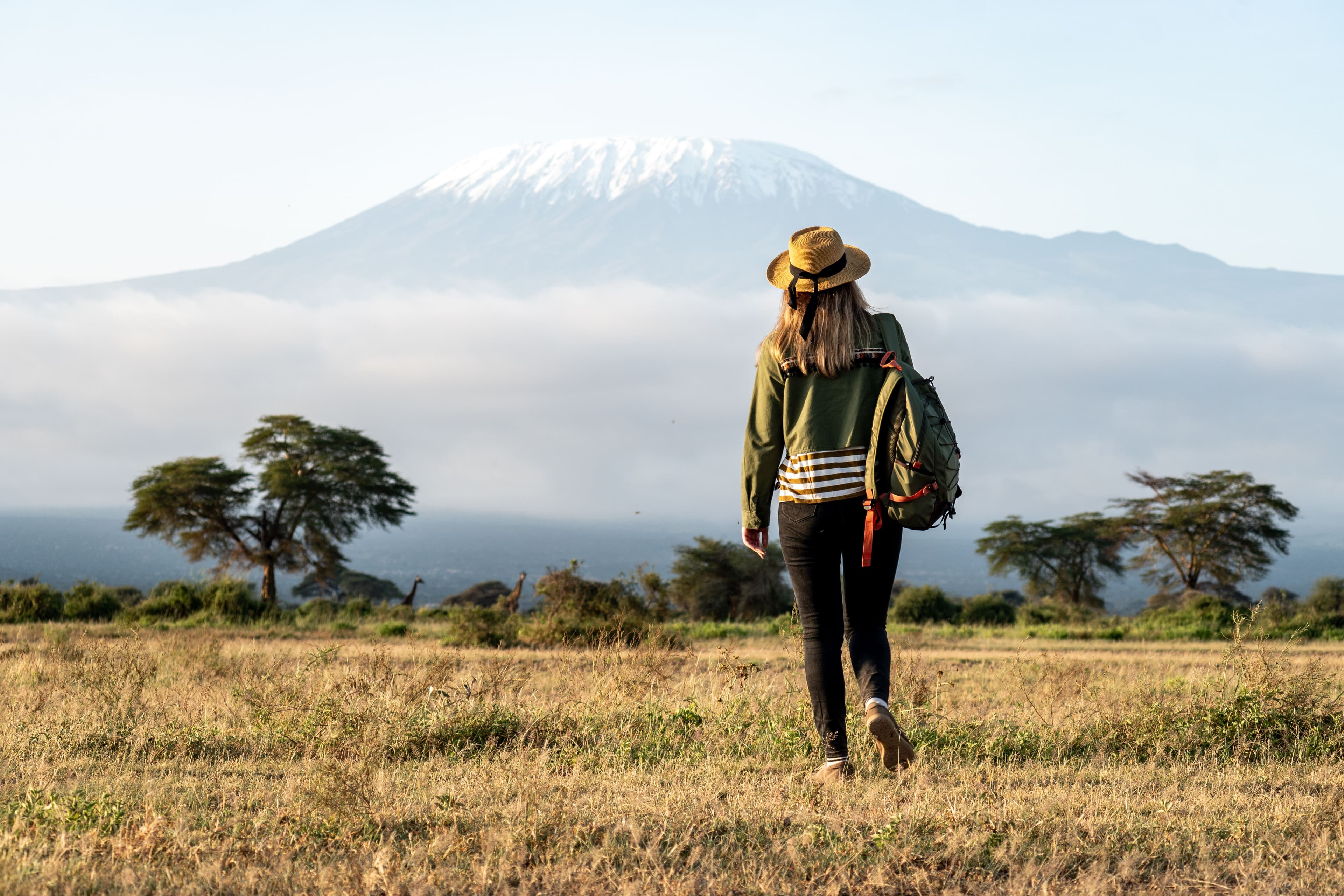
Kilimanjaro
The highest mountain in Africa and the highest freestanding peak in the world
No technical climbing required, but the altitude is real, and the routes take five to nine days.
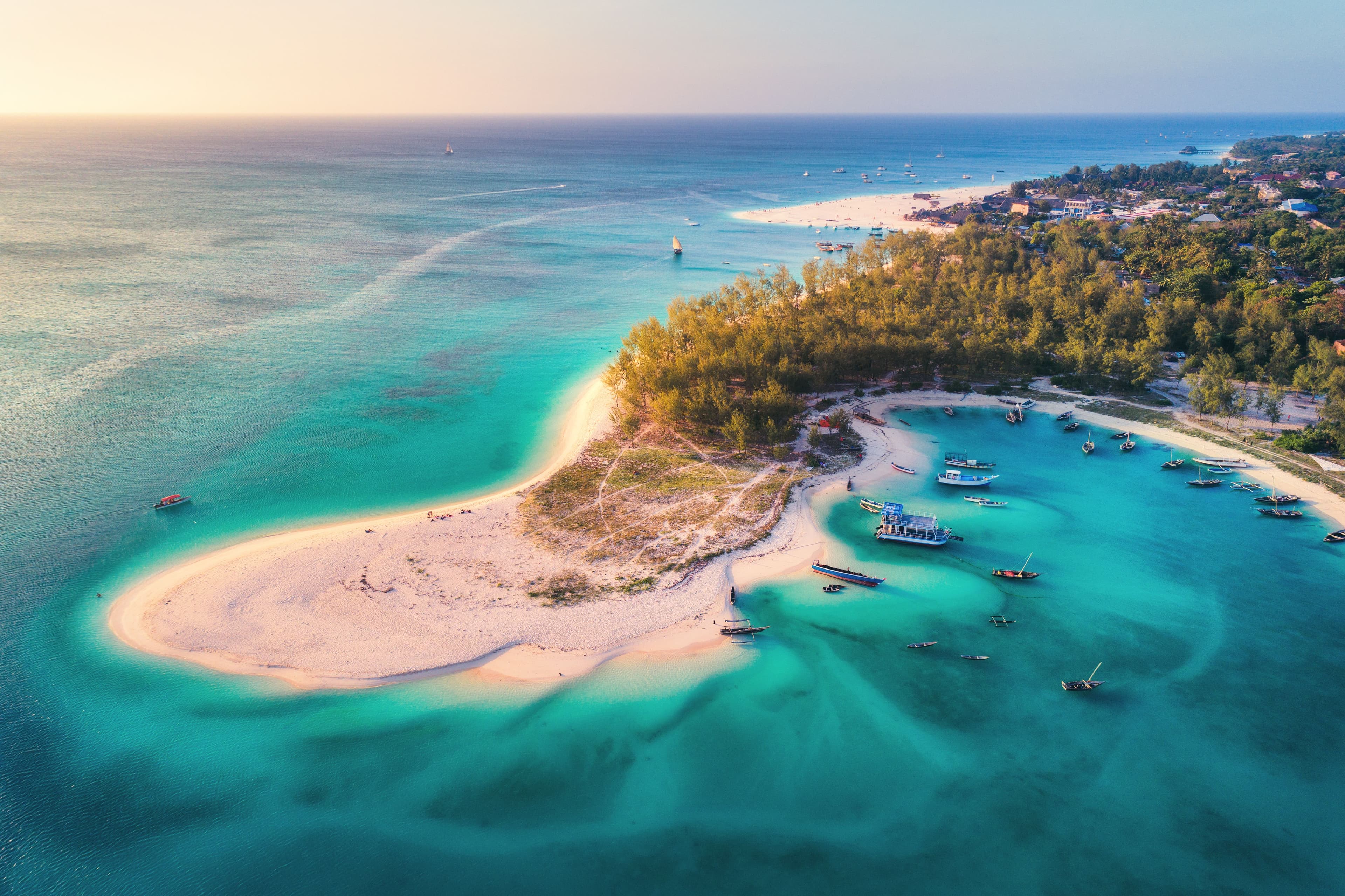
Zanzibar
An hour's flight from the plains
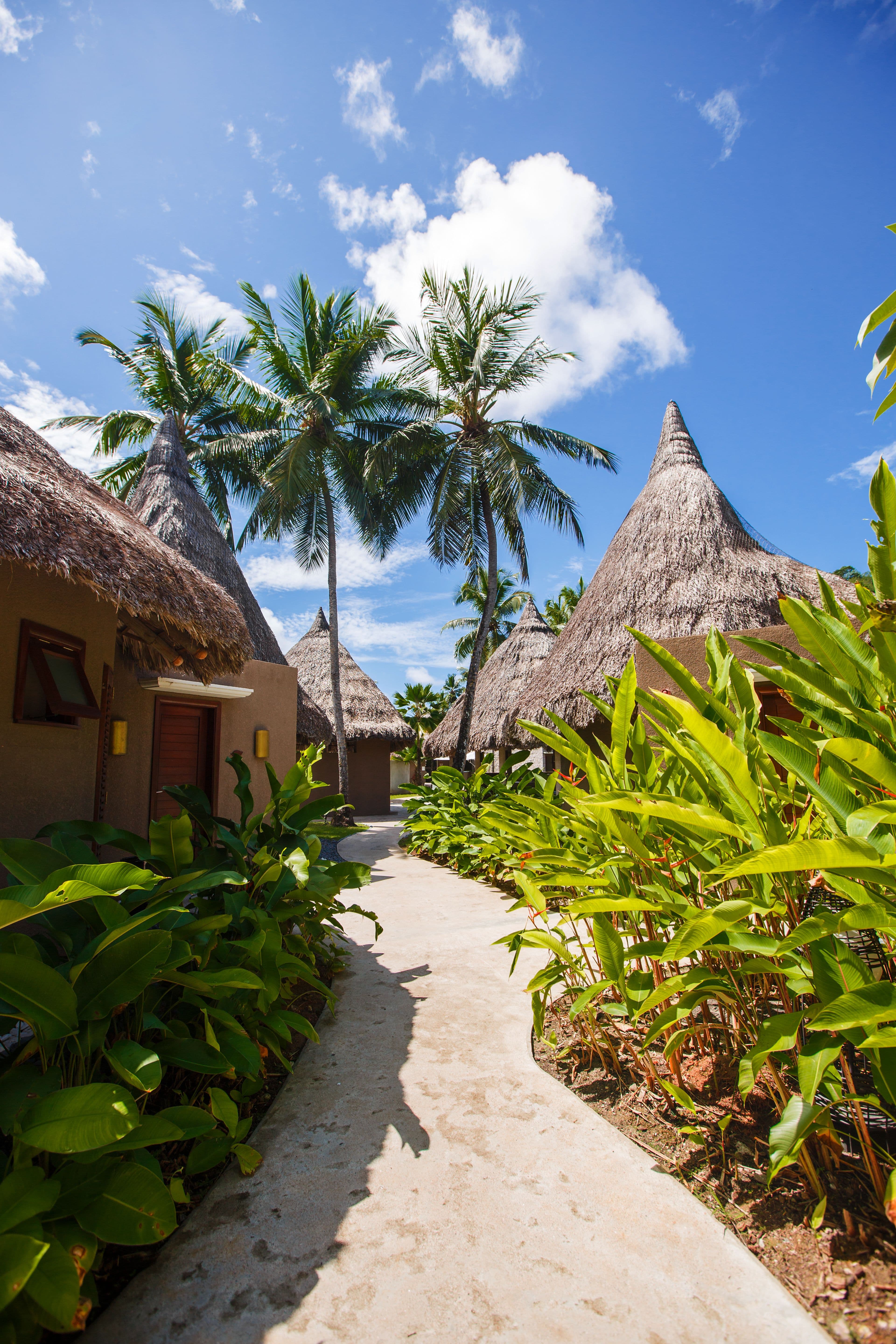
Stone Town's alleys and spice markets, then white sand and warm water on the east coast.
Tanzania, at a glance.
An enormous safari country with a crater, a mountain and an island attached, where timing decides everything.
The Migration Never Stops. It Just Moves.
The Month Decides the Camp
Over a million wildebeest, with zebra and gazelle alongside them, circle between the Serengeti and Kenya's Mara across the year. They are always somewhere. The question is where. Roughly January to March, the herds are in the southern Serengeti and calving, which brings the predators in close. Around April to June they move north and west, and the Grumeti crossings happen. From July to October they are in the north, crossing into Kenya and back. So the camp gets chosen for the month, not the other way round. That single decision is the difference between watching the migration and driving towards it.
See Where the Herds Are
Drive Into a Volcano, and Everything Is Already There
Ngorongoro is a caldera, a volcano that collapsed in on itself and left a bowl about twenty kilometres wide with walls six hundred metres high. Because the walls are steep, most of the animals inside never leave. Around 25,000 large animals live on the crater floor permanently, which makes the density here higher than almost anywhere in Africa. Black rhinos survive here when they have gone from most of the region. You descend at dawn on a single track, and by the time you reach the floor the light is coming across the grass. It is the one place in Africa where the wildlife is essentially guaranteed rather than tracked.
Tell Us When, and We Will Tell You Where
On most trips you pick the place and then the dates. Tanzania works the other way, because the animals move and the camps are fixed. So we start with your month. That determines which part of the Serengeti you stay in, whether the crossings are realistic, and whether the crater or the plains should carry more of your nights. Eight to ten nights covers the Serengeti and the crater properly. Add four or five for Zanzibar. Kilimanjaro needs its own week on top. Give us the month and the number of travellers, and we will work backwards from there.
Tell Us Your MonthWhat You Get When You Book Through Fortune
Two decades of running long routes have taught us what a trip actually needs, and we build every booking around that.
Two Decades of Long Routes
Nearly two decades sending travellers from Kerala across the world.
One Point of Contact
Flights, camps, transfers and paperwork all come back to the same team.
Trips Matched to the Traveller
A honeymoon route and a family route are not planned the same way.
Offices Across Kerala
With branches present in Kochi, Thiruvananthapuram, Thrissur and Kannur.
FAQ
Questions with useful answers
June to October is the dry season and the peak. January and February are dry and green, with calving in the southern Serengeti. April and May are the long rains, cheaper but harder going.
Eight to ten nights for the Serengeti and the crater. Add four or five for Zanzibar. Kilimanjaro needs its own five to nine days on top.
The herds are always somewhere in the system, so the migration itself is reliable. The river crossings are not, because the animals cross when they choose. Being in the right region for your month is what matters.
Tanzania is bigger, wilder and generally more expensive. Kenya is easier to reach and cheaper. The Serengeti and the Mara are the same ecosystem, so the wildlife is similar. We will talk you through both.
Malaria precautions are needed. Yellow fever usually matters for returning to India rather than entering Tanzania, and it has to be arranged well ahead. We raise it at booking.
Yes, and most travellers do. It is a short flight from the safari circuit and the natural way to end the trip.